




在神农架的密林与武夷山的溪涧间,藏着两栖爬行动物的奇妙世界。眼镜王蛇上演罕见双母守巢,新物种接连被发现,蛇类的月相理论首次被提出。走进这片隐秘天地,我们将解锁爬行动物的独特行为,重新认识人类对蛇的恐惧…
出品:格致论道讲坛
以下内容为南京林业大学教授Kevin R. Messenger演讲实录:
很高兴来到这里。我叫Kevin R. Messenger(凯文·梅辛杰),是南京林业大学生命科学学院的动物学教授。今天,我想和大家聊聊我的研究领域——两栖爬行动物学,带大家走进我们脚下那个不为人知的隐秘世界。
初入神农架
我从小就被动物环绕着长大。我的父亲是一名兽医,他经常会把那些被送到诊所的受伤动物带回家照料。
下面是我小时候的照片。第一张照片里我正抱着一只小猪崽,第二张照片能看出来我们家还养过一段时间的鸡。第三张照片里,这只浣熊的妈妈被车撞了之后,它就成了孤儿,于是我们一直养着它,直到它能独自生存,再把它放回野外。
在我大概三岁的时候,父亲带过一条蟒蛇回家,那是我记忆里第一次见到蛇。我盯着它看,只觉得这是一种神奇的动物,而且酷极了,心里没有丝毫恐惧。
从那时候起,我就感觉自己和蛇类之间有了一种特殊的联结,并想尽一切办法去了解它们。
下面左边的照片上是我妈妈、姐姐和我。妈妈正在给我们展示一条蛇,但不是之前那条蟒蛇。从小到大,每次去树林里,我们都会特意去找蛇。
上大学后,我开始思考自己未来的人生方向。
一开始,我考虑过从事兽医行业。但同时我又热爱两栖爬行动物学,因为我喜欢去户外寻找各种动物。于是,我渐渐更倾向于两栖爬行动物学这个方向。
课余时间,我会去野外做研究、寻找蛇类,也会和同学们一起外出考察。离北卡罗来纳州立大学不远的地方有一座博物馆,我经常去那里研究馆藏标本,尽可能地汲取知识。
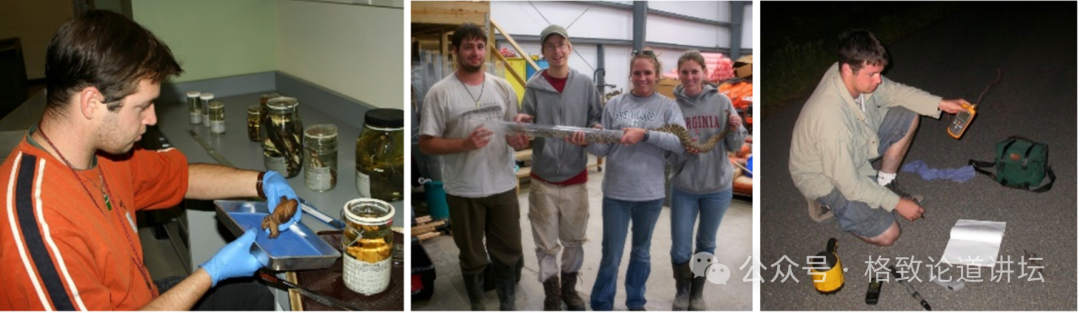
▲从左到右:在实验室、跟同学一起、外出考察
本科生涯即将结束时,我的导师Heatwole博士给我发了一封邮件,告诉我有一个为期四个月的项目机会,需要一名学生前往中国鄂西的偏远山区,在神农架开展两栖爬行动物调查,记录当地的爬行类和两栖类物种。
我立刻申请了这个职位,很幸运我被录取了。
本科毕业没几天,我就登上了飞往中国的航班。我先飞到北京,再坐火车到宜昌,接着换乘大巴,颠簸了五个小时,最终抵达神农架林区的辖镇——木鱼镇。
在这四个月里,我们从木鱼镇出发前往神农架的各个野外工作站。我尽可能多地捕捉动物、记录下那些能识别的物种信息。
每次回到木鱼镇,我都会把自己的新发现分享给亲友。那时候还没有智能手机,而且当地几乎没有网络信号,所以我只能趁回到木鱼镇的时候,去镇里的网吧上传我的考察成果,让家人、朋友知道我在中国的经历。
现在的木鱼镇已经今非昔比,但也并非彻底不同。回到这张2006年的照片里,这家小小的挂着灯笼的菜馆,现在已经变成了一座大型商场。就像我们看到的那样,一切都变得越来越便利、越来越现代化,我们手指点点就能得到一切。
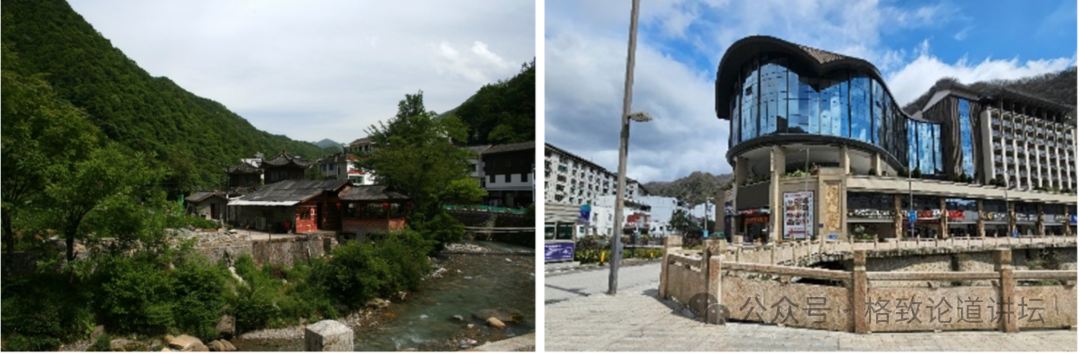
▲左:2006年的木鱼镇
右:现在的木鱼镇
神农架对我来说,几乎就像第二故乡。那是我第一次踏上中国的土地,景色美得令人惊叹。我们会在澄澈干净的溪流里面游泳,很多时候还会直接喝河水。
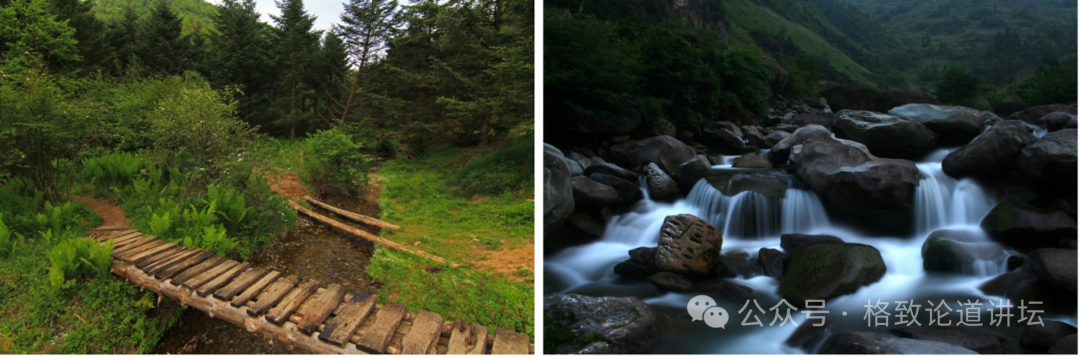
▲左:大龙潭高海拔地区景色
右:小溪
在神农架的四个月里,我们辗转于各个野外工作站,捕捉、记录那里的两栖爬行动物。
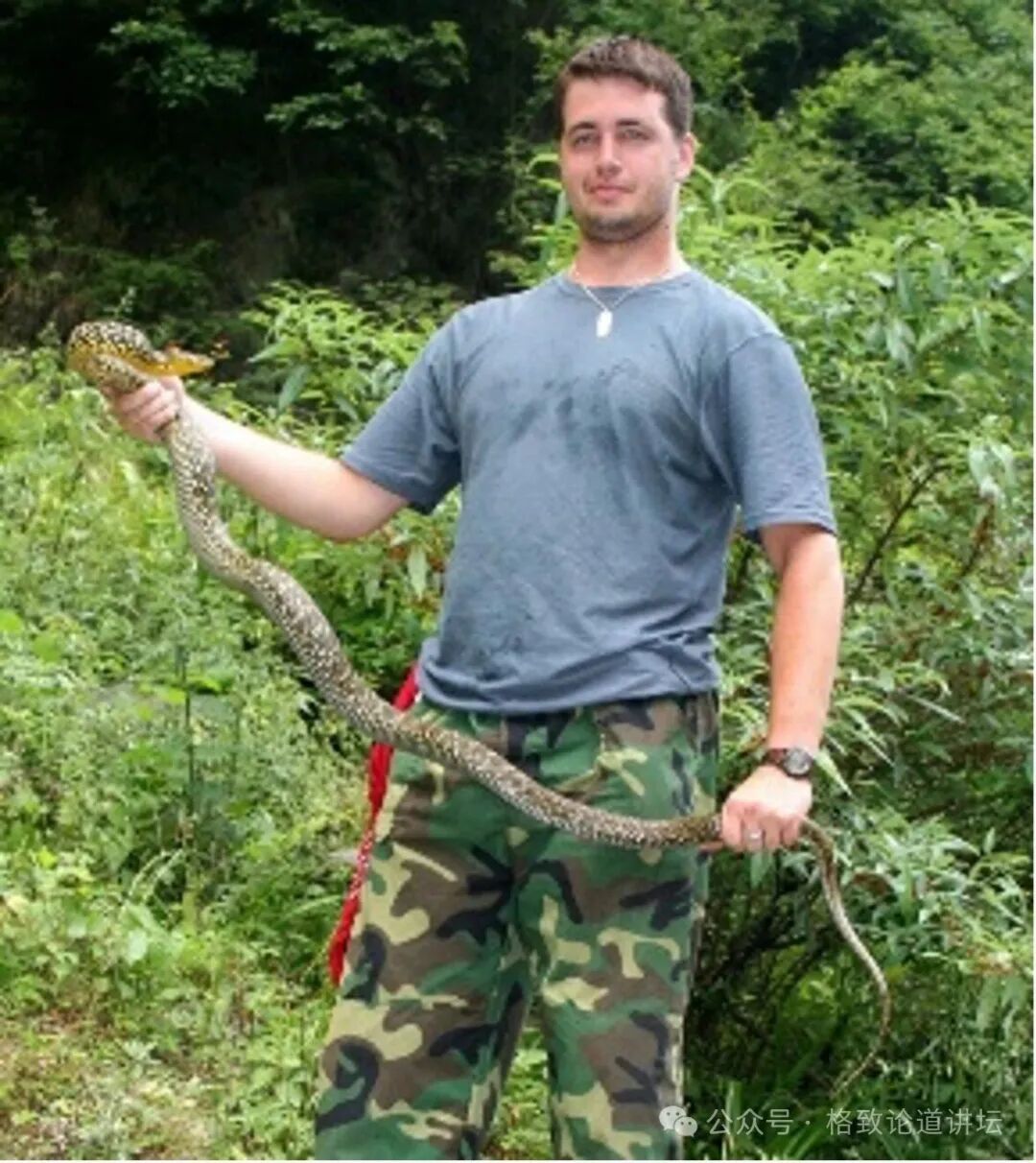
▲凯文·梅辛杰拿着一条王锦蛇
有一次,我遇到了一位当地村民,他对我的工作很感兴趣,主动问我能不能跟着一起帮忙。于是,我教他怎么安全地抓蛇——捏住蛇的头部后方,避免被咬伤。当时我们抓的是乌梢蛇,没有毒。我不会让一个新手去接触毒蛇。
自从2006年第一次来到神农架,我就努力争取每年至少来中国一次。每次回来我都会去神农架和老朋友叙叙旧,再做一些新的考察。几乎每一次去,我都会有新的发现,要么是保护区内从未记录过的物种,要么是湖北省的物种新纪录。当地的人也都很认可我在那里做的工作。
寻蛇之旅
已完成:30% //////////
2017年,我从阿拉巴马农工大学毕业,获得了博士学位。紧接着下个月,我从南京林业大学毕业,获得了另一个博士学位。同年秋天,两所学校都向我发出了邀约。
最终,我选择留在中国工作。因为我从事的领域,在中国工作的优势远大于美国。

说到如何寻找两栖爬行动物,需要准备好各种工具。
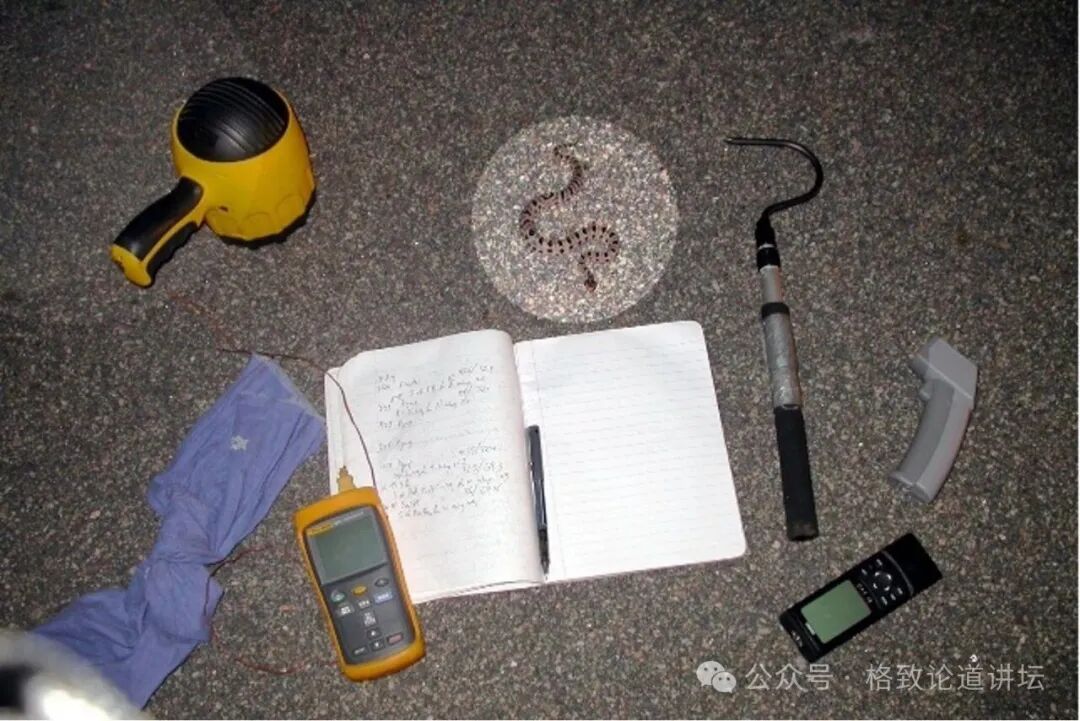
大多数两栖爬行动物都在夜间活动,所以每晚外出考察时,我都会带上各种装备:一把亮度足够高的强光手电筒,一些记录环境的仪器,不同环境温度、风速、露点以及相对湿度的仪器,一个GPS定位仪。
我们去的地方不是一定都有信号,有时候必须靠GPS来确定自己的位置。当然,还得带上捕蛇工具,还有我们用来捕捉毒蛇的蛇钩。虽然我尽量避免徒手去抓毒蛇,但有时也不得不这么做。
寻找动物的过程中,经验显然起着至关重要的作用。
有一次和我们合作的摄制组想要拍摄一种特定的蛇类。我告诉他们,要找这种蛇最好的方法就是在某种栖息环境、某个时间,去某条路沿线。
当时他们非常困惑,因为不会想到在繁忙的高速公路旁边竟然能找到蛇。但凭借经验,我知道那里就是寻找这类蛇的绝佳位置。
我们用视频记录了发现蛇时候的原样。当时我们在神农架发现了一条毒蛇,名为菜花原矛头蝮,也叫杰尔登蝮。那是一条雌性蛇,发现它的时候它正趴在石缝里晒太阳,利用阳光的热量孵卵。这就是为什么我们能在白天的这个位置发现这种蛇。所以说,经验很重要。
耐心也是寻找两栖爬行动物的关键。即便所有条件都完全符合预期,也不代表你一定能找到目标动物。这就跟钓鱼是一个道理,可能今天鱼口大开,明天却一条鱼都钓不上来。
我本科的时候在南卡罗来纳州做过一个研究项目,当时所有条件都堪称完美,但就是一条蛇都没找到。我百思不得其解,直到抬头望向天空,看到一轮又大又亮的满月挂在天上。
后来,我发现这类蛇会刻意避开满月之夜,并基于这个发现提出了“月相理论”。
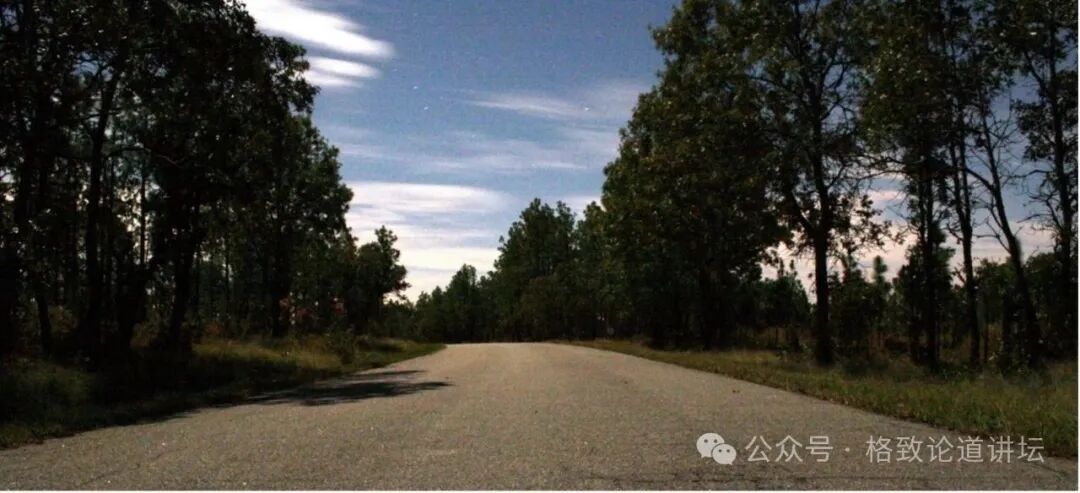
▲南卡罗来纳州的满月之夜
所以说,耐心太重要了,不是出门找就一定能有所收获,运气也是找到两栖爬行动物的一大因素。就像我常说的,正确的地点,正确的时间,即便万事俱备,也不代表你能在那个地方遇到那只特定的动物。
有一次我们开车行驶在神农架的土路上,在路中间发现了一条蛇。那是一条无毒的赤链蛇,应该是在等着老鼠或者蟾蜍路过,这就是运气。
香港的一次经历也是运气使然,那绝对是我最难忘的经历之一。香港有很多水渠负责将水引入水库。暴雨过后,很多蛇会被冲进渠里。蛇一旦掉进渠,最后只能活活饿死,因为渠里根本没有食物。
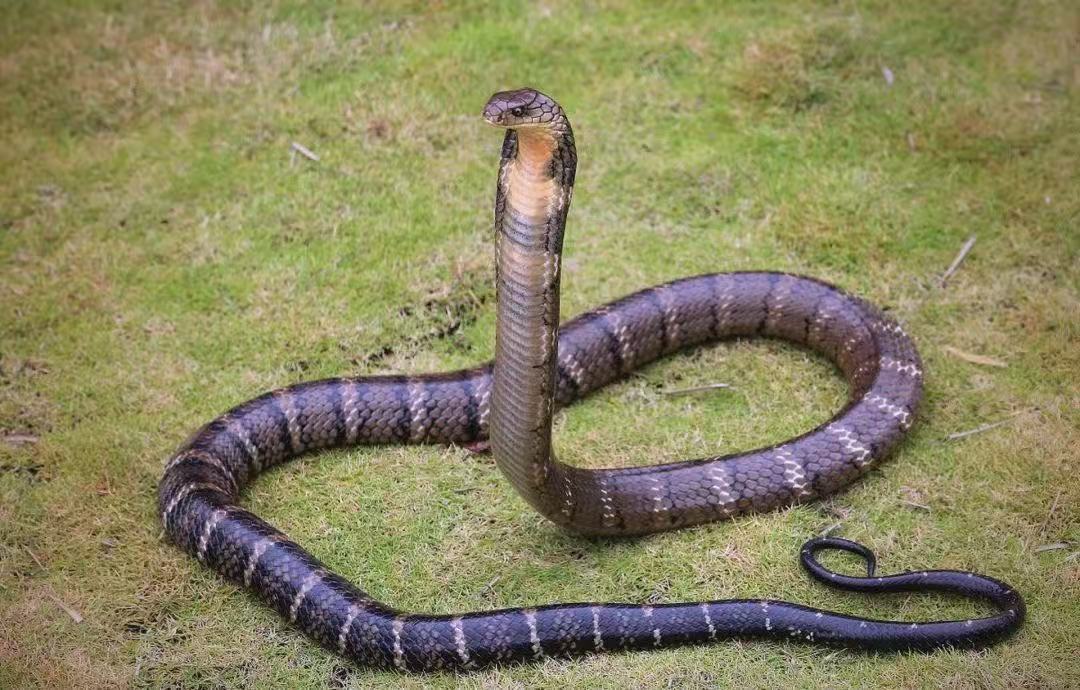
有一年,我和朋友特意去其中一条水渠找蛇。暴雨过后是找蛇的好时机,我们在隧道里发现了一条三米长的眼镜王蛇。我们用上文提到的蛇钩,把它从隧道里带出,拍完照之后,就把它放归野外了。
在野外观察这些动物,还有一个特别有意思的地方,就是你能看到很多它们在人工饲养环境或者动物园里根本不会展现的行为。
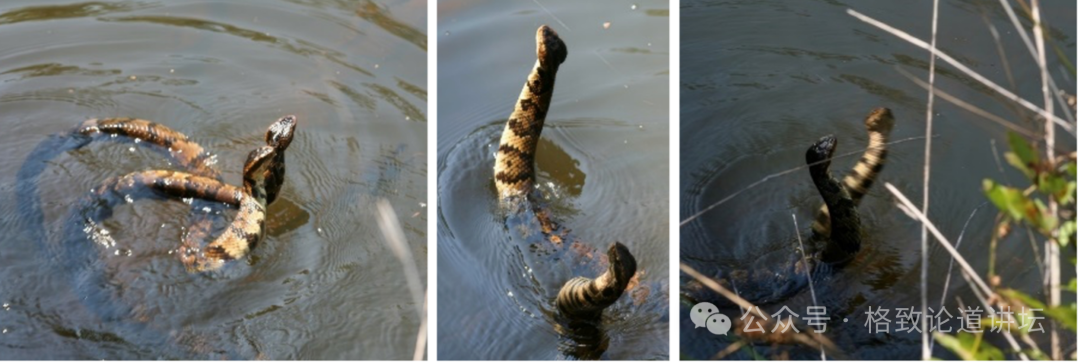
棉口蝮是一种原产于美国的蝰科毒蛇。照片里的两条棉口蝮都是雄性,它们正在进行“争斗之舞”。当雄性为了争夺配偶而打斗时,它们的身体会相互缠绕在一起。
这场较量的规则很简单:在它们的领地范围内,谁能先把对方的头按到水底下,谁就是胜利者。通常情况下, 这种争斗发生在陆地上,但照片里的两条棉口蝮却在水里缠斗。
有一种很有意思的行为是眼镜王蛇独有的,它们是世界上唯一一种会主动筑巢的蛇类。
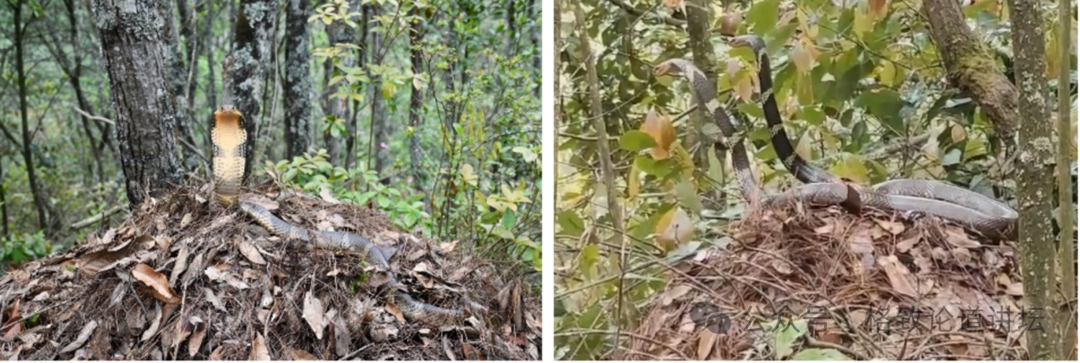
大多数蛇只会把卵产在天然的巢穴里,比如岩石底下、木头下面或者潮湿的落叶堆中。但眼镜王蛇会主动收集落叶和树枝,堆砌成一个土堆。土堆内部会形成一个空间,它们就把卵产在这个自制的巢穴里。
去年,我们观察到了一个前所未有的现象:两条雌性眼镜王蛇共同守护着同一个巢穴。不是一雌一雄,雄性不会保护巢穴,在眼镜王蛇产卵之后,只有雌蛇会留下来守护巢穴。而我们观察到的这个现象是两条雌蛇共同守护一个巢穴,巢穴里还有两窝不同的蛇卵,而不是一窝数量特别多的卵。
这么多年来,我在神农架已经协助记录了十多种此前未被报道的物种,在这里就不一一介绍了。除非你和我一样痴迷于两栖爬行动物学,否则这些内容可能会有些枯燥,不过如果大家感兴趣的话,演讲结束后可以来找我,我能就这个话题聊上好几个小时。
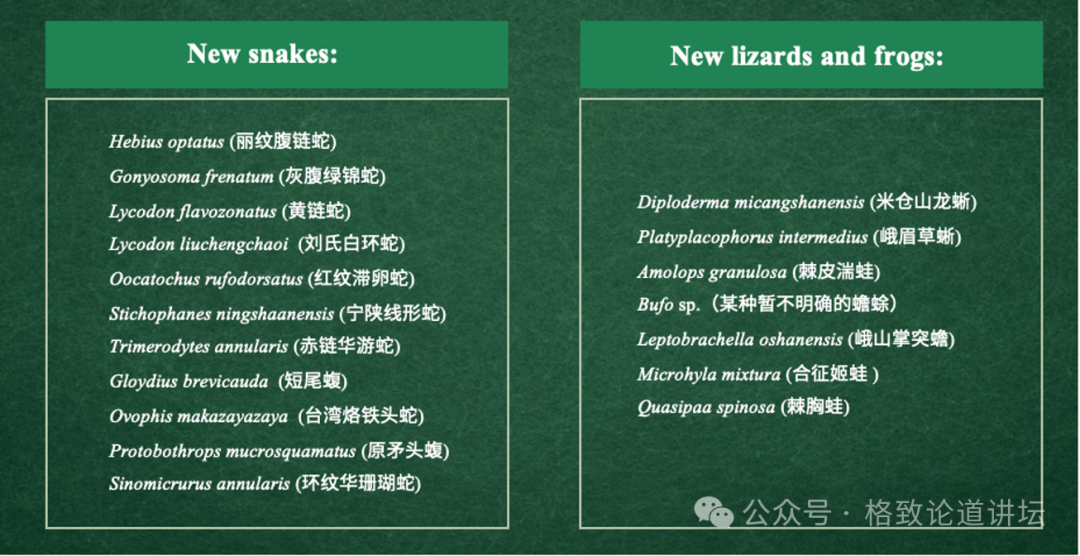
▲完善了神农架蛇类物种名录,记录了10多个此前未报道过的物种
下面我来给大家分享几个亮点物种。王锦蛇是我最喜欢的神农架蛇类之一。王锦蛇有个特点,即爱吃其他蛇类,尤其喜欢捕食毒蛇。这也是“王锦蛇”这个名字的由来。
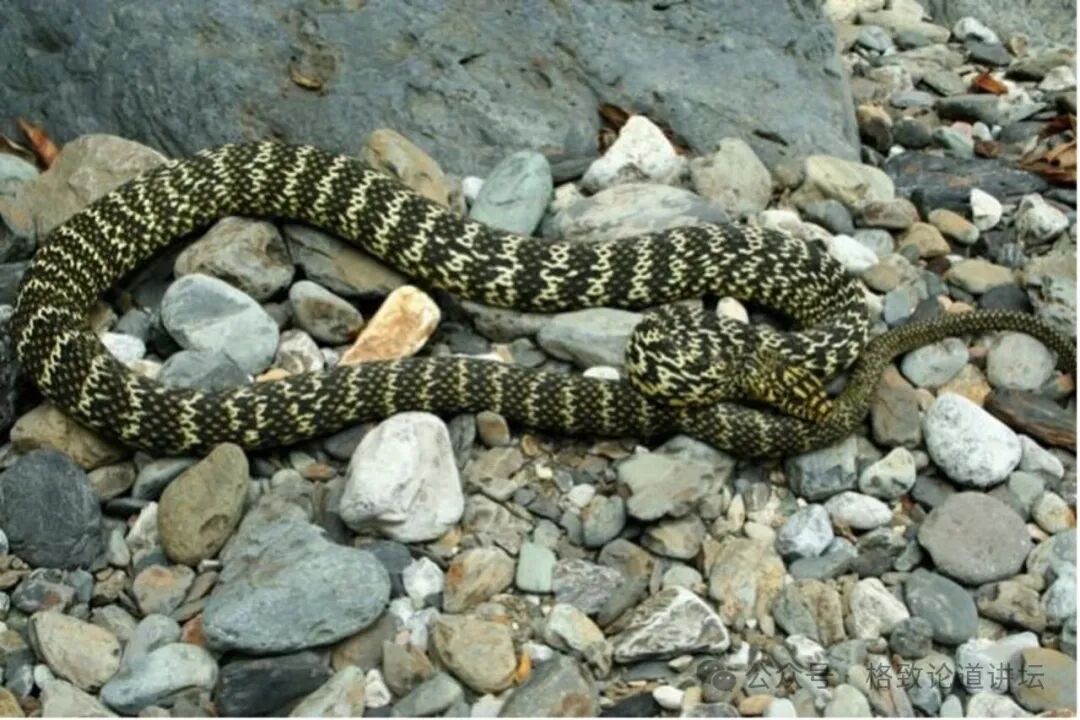
▲王锦蛇 Elaphe carinata
宁陕线形蛇曾是神农架地区非常罕见的物种。我第一次发现它们的时候,一下子找到了17 条。当时这种蛇被划分在另一个属下面,后来我和同事一起研究,将它重新归类到线形蛇属。
▲宁陕线形蛇 Stichophanes ningshaanensis
紫灰锦蛇是一种非常美丽的蛇,也是我最喜欢的中国蛇类之一。我和这种蛇之间还有一段特别的渊源。
菜花原矛头蝮是一种颜值很高的蛇,在神农架很常见。我在2012年时被这种蛇咬过,不过没什么大碍,不然今天也不能站在这里了。
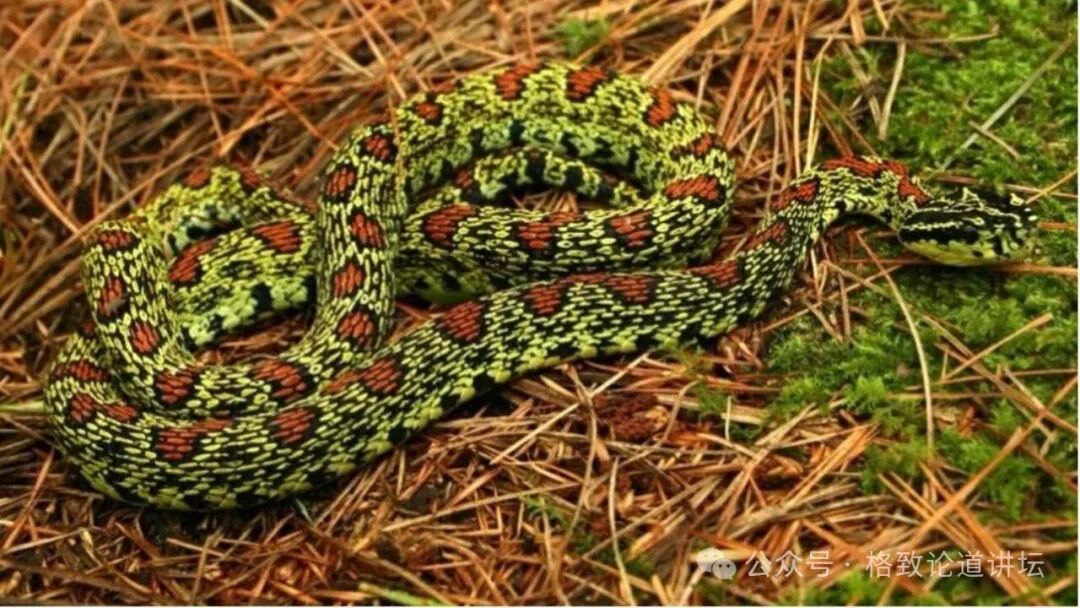
▲菜花原矛头蝮 Protobothrops jerdonii
环纹华珊瑚蛇的性情十分温顺,这是我们2023年在保护区发现的一个新物种。这里说的不是科学上的新物种,而是神农架林区的新记录。2023年,我们还在神农架首次记录到了台湾山烙铁头。
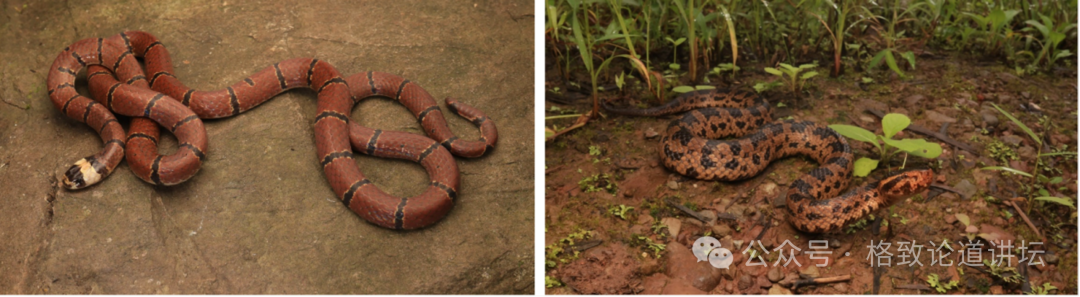
▲左:环纹华珊瑚蛇 Sinomicrurus annularis
右:台湾山烙铁头 Ovophis makazayazaya
白头蝰这种蛇非常迷人,也很有意思,它是世界上最原始的蝰类之一。神农架的白头蝰种群数量非常健康。
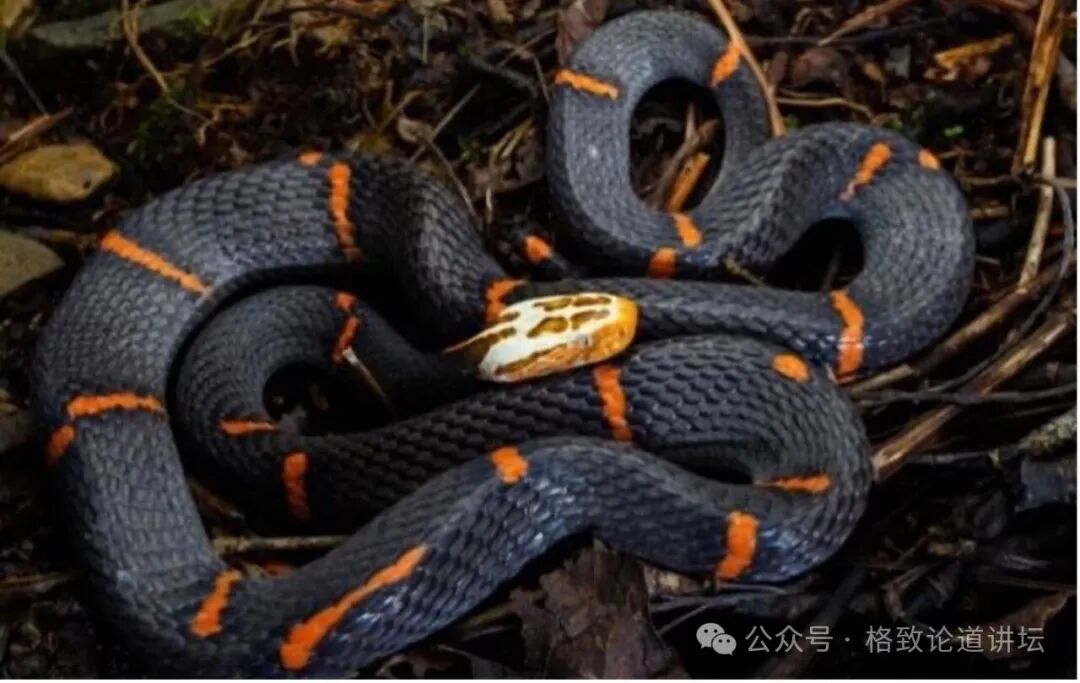
▲白头蝰 Azemiops feae
雨后发现新物种
已完成:60% //////////
2013年,我得到了一个去武夷山考察的机会。武夷山素有“蛇类王国”之称。当时我还是一名研究生,同时在美国和中国攻读两个博士学位。我的导师丁雨龙教授邀请我去武夷山,给他的学生们讲讲爬行动物和两栖动物。
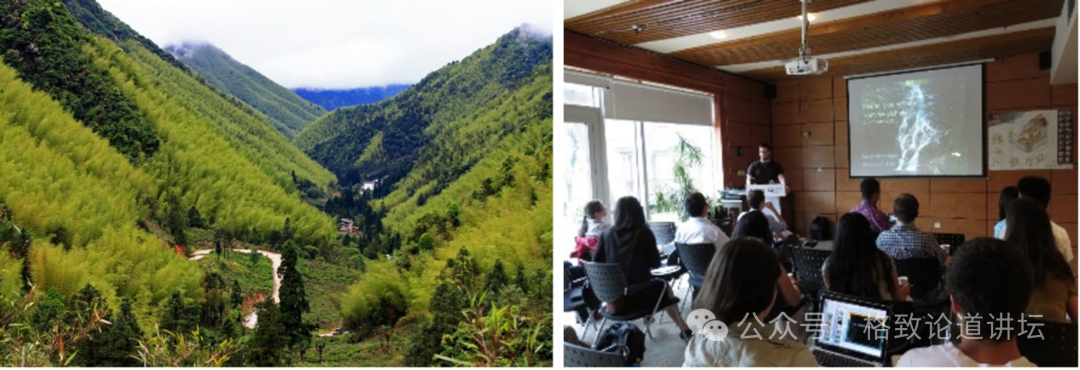
课堂上,丁教授给我们讲了武夷山和挂墩村的历史。挂墩村很有名,世界上有大约60种脊椎动物的模式产地都在这里。
所谓模式产地,就是一个物种首次被发现并命名的地方。自19世纪70年代起,就有外国科学家来到挂墩村考察,而当地最后一个被发现的新物种还要追溯到1975年。丁教授半开玩笑地说,说不定在我们这些学生里,有人能在这次考察中发现新物种。
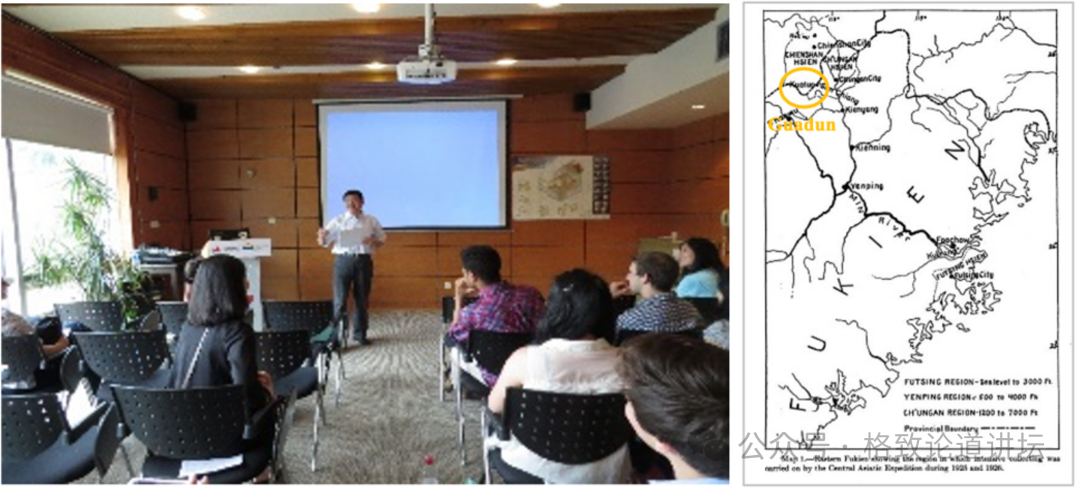
我当时完全没把这话当真,但那年夏天,我们真的发现了一种角蟾。
我拍了一些这种角蟾的照片,开始以为它只是已知物种中的一种。但回到美国后,我对它做了更多的研究,才发现这种角蟾此前从未被记录过。在接下来的几年里,我们集中精力寻找这种角蟾的更多标本,最终收集到了足够的样本,撰写并发表了相关论文。
这种角蟾非常难找,在林间的隐蔽性极强,而且它们只在暴雨过后才会出来活动。我们第一次去找的时候,连续找了八九天,都一无所获。后来,一场暴雨降临,那天晚上我再出门时,发现这种角蟾到处都是。
因此我们给它取的拉丁学名里,带有“喜欢暴雨”的含义。我和同事商量,想给它起一个和“雨”相关的中文名。最后,决定以中国的雨神为名,将它命名为“雨神角蟾”,而挂墩村就是它的模式产地。
刚刚说了武夷山是“蛇类王国”,接下来给大家展示几种当地的蛇类,比如福建竹叶青和玉斑锦蛇、颈棱蛇、锈链腹链蛇。玉斑锦蛇绝对算得上是中国最美的蛇类之一。颈棱蛇我们也称为伪蝮蛇,没有毒。下图中锈链腹链蛇正张着嘴做出防御姿态。
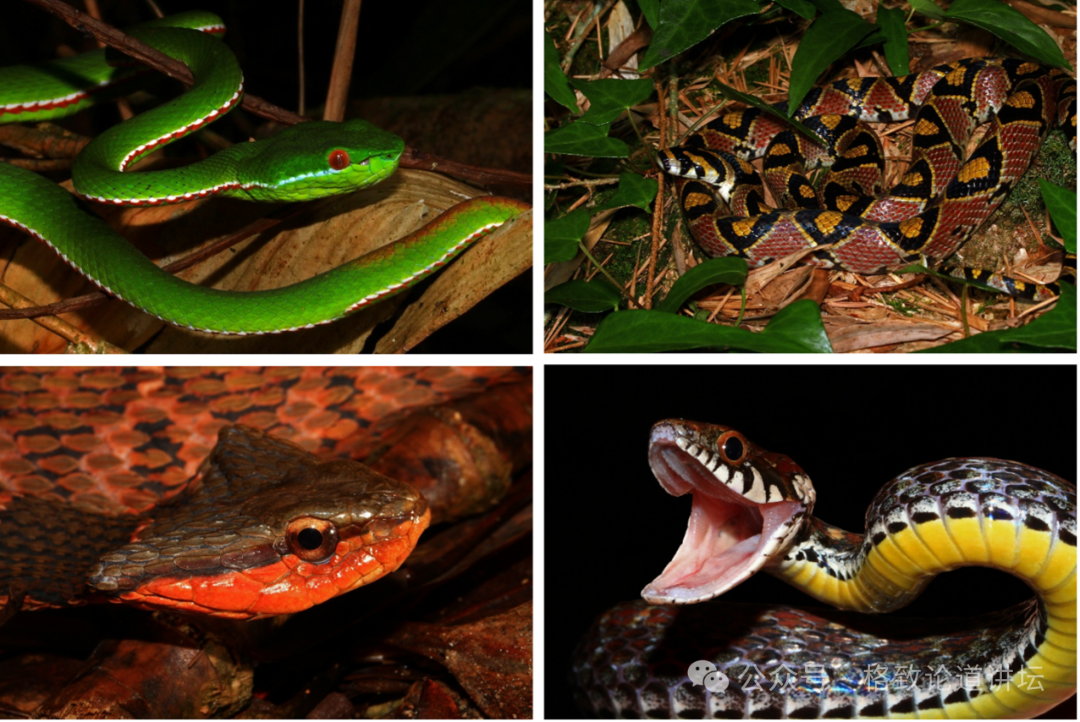
▲左上:福建竹叶青 Trimeresurus stejnegeri
左下:颈棱蛇 Pseudagkistrodon rudis
右上:玉斑锦蛇 Euprepiophis mandarinus
右下:锈链腹链蛇 Hebius craspedogaster
还有不同种类的珊瑚蛇,比如福建华珊瑚蛇,以及典型的尖吻蝮,也就是五步蛇。
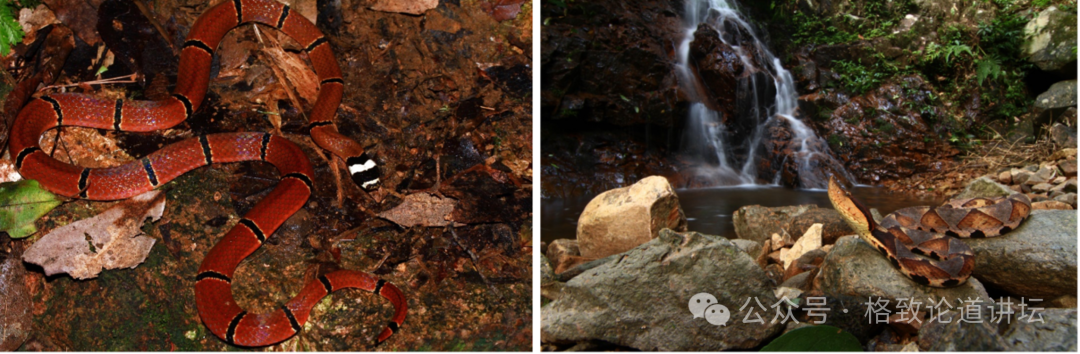
▲左:福建华珊瑚蛇 Sinomicrurus kelloggi
右:尖吻蝮(五步蛇) Deinagkistrodon acutus
恐惧并非与生俱来
已完成:90% //////////
在中国做了这么多年的研究,我觉得有必要写几本书,分享我对两栖爬行动物的热爱,也借此回报这个世界。
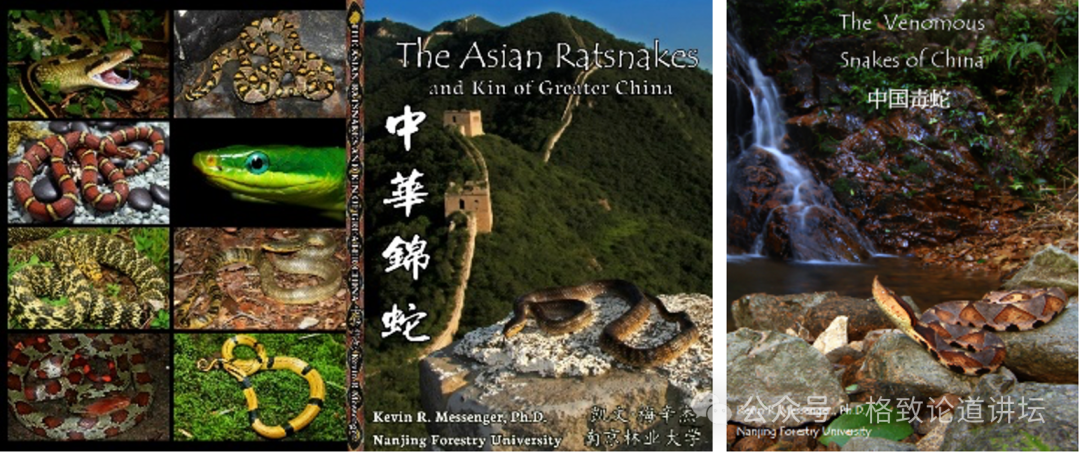
2021年,我出版了《中华锦蛇》一书,重点介绍了中国的19种锦蛇。目前我正在赶写第二本书《中国毒蛇》,希望能在本月(2025年9月)或者下个月完成初稿。这本书将会收录中国的131种毒蛇。
我想说,人们往往会惧怕自己不了解的事物。提到蛇,很多人首先想到的就是被蛇咬伤,这也是大多数人害怕蛇的原因。我被蛇咬过成千上万次,但我现在依然好好地站在这里。当然,这些咬伤大多来自无毒蛇。
大学的时候,我和朋友们还玩过一个游戏,把一堆无毒蛇放进袋子里,我们伸手进去,只凭被蛇咬的感觉来判断蛇的种类。所以说,被蛇咬其实并不像大家想象的那么可怕。
我再给大家举个例子。视频里这条是王锦蛇,我刚把它抓住的时候,它咬了我一口,我的前臂上还留着血迹,我的妻子想要帮我擦拭血迹。那条王锦蛇并不想被抓住,它甚至朝镜头发起了攻击。
我必须澄清的是,它不是在主动攻击人,只是在自卫。我伸手去抓它,它才咬了我,是我先招惹了它,把它抓了起来,而它原本只是在森林里安分地待着。蛇是不会主动攻击人类的,它们只会在受到威胁时自卫。大多数人被蛇咬伤,都是因为不小心踩到了蛇或者主动去抓蛇。
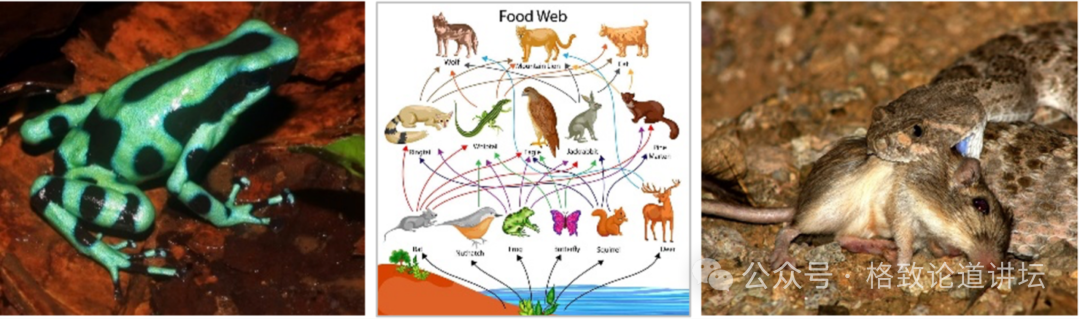
两栖爬行动物对人类的意义也十分重大,我们很多药物的研发都离不开各种两栖爬行动物,它们在食物链中也扮演着关键角色,除了生产者层级外,它们几乎存在于食物链的各个层级。拿鼠类防治来说,保守估计蛇类每年能捕食大约200亿只老鼠。
在神农架工作的这二十年里,我很欣慰地看到当地一些村民对蛇类的态度发生了转变。更加幸运的是,我也改变了妻子对蛇的看法。
2024年4月24日,我的妻子接触了她人生中的第一条野生蛇。那是一条无毒蛇而且它没有咬人,但大家还是能从视频里看出来她当时有多害怕,这是我们约会了四年后的结果。
但仅仅一年之后,她就变成了下面视频这个样子。视频里抓的跟之前是同一种蛇。一年之后的她,已经能独自走进森林,自己找蛇、认蛇,甚至还能主动上手抓蛇了。
很多人对蛇的恐惧都源于童年。我们从小就被灌输“蛇很可怕”的观念,但人类对蛇的恐惧并非与生俱来,克服这种恐惧的方法之一就是教育下一代。
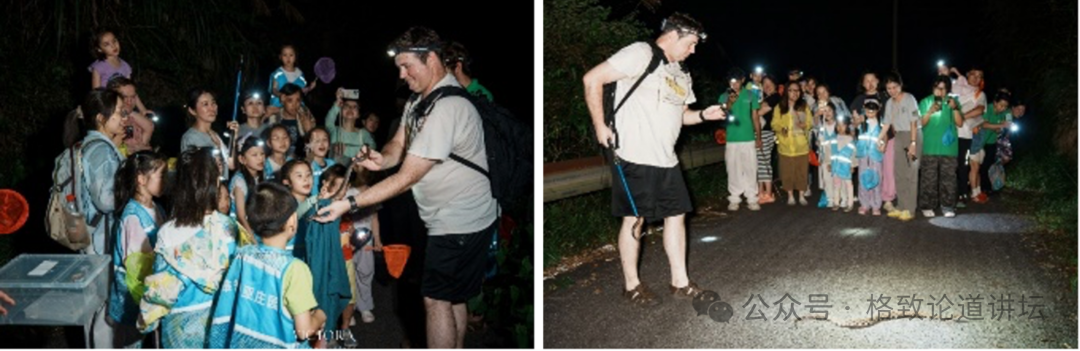
于是,我和妻子一起参与了很多自然科普活动。我们带孩子们接触野生动物,让孩子和家长们近距离观察蛇。通常孩子们最勇敢,慢慢地家长们也会放下顾虑,第一次伸手去触摸蛇。我们只是想告诉大家,蛇并没有你们想象的那么可怕。
最后,我想以一句陪伴了我很久的话来结束今天的演讲。这句话是:“我们保护我们所热爱的,我们热爱我们所了解的,我们了解我们所研究的。”
如果你对一样事物感兴趣,你就会去研究它,研究之后你就会真正了解它,了解之后你大概率会爱上它,而当你爱上它,你就会想要去保护它、守护它。
我的演讲就到这里,谢谢大家!
The Hidden World Beneath Our Feet
Thank you very much. It's a pleasure to be here. My name is Kevin R. Messenger. I'm a professor of zoology at the College of Life Sciences at Nanjing Forestry University. And today I'm gonna talk to you about herpetology, my area of interest, the hidden world beneath our feet.
So growing up I was surrounded by animals. My father is a veterinarian. Frequently he would bring home wounded animals that came into the hospital.
Here's a picture of me as a little kid cuddling a little pig. We raised some chickens at one point. This raccoon here, his mother was hit by a car and orphaned, so we raised him until he's old enough to survive on his own, and then we released him in the wild.
One of the animals that dad brought home was a python when I was about 3 years old. And this was my first snake that I can ever recall seeing. And I remember looking at it and just thinking it was an amazing animal, no fear whatsoever. I just thought it was the coolest thing ever. So from that point on, I kind of felt a connection with snakes. I wanted to learn everything I could about them.
Here's a picture of mom, my sister and me. My mom was showing us another snake, it's not the python. But growing up anytime we went to the woods, we would go and try to look for snakes. There are some other pictures of myself catching a black rat snake.
When I started going to college, thinking about what I wanted to do for life, either veterinary medicine was one thought, and then the other side of me wanted to do herpetology because I enjoy being outdoors, I like finding animals. So I started leaning more towards herpetology side of things.
In my free time, I would do some research in the field, looking for snakes, go out with classmates. There is a museum not too far from NC State University where I go and look at their specimens and try to learn as much as I could.
Towards the end of my undergraduate career, my advisor Doctor Heatwole sent me an email, requesting there was a job offer for a student to come to China for about four months to these remote mountains in central Hubei Province, and try to catalog the reptiles and amphibians that were present in Shennongjia. So I applied for the position, thankfully got it.
A couple of days after graduating from undergrad, I flew to China, flew to Beijing, took a train down to Yichang, followed by a five-hour bus ride to Muyu, and finally arrived in Shennongjia.
We would go from Muyu to different field stations throughout Shennongjia. I would catch as many things as I could. And then when I came back to Muyu, I would notify friends and family about all the different findings I was having. We didn't have smartphones, and there was almost no internet at all. So my only option for doing this would be when we came back to Muyu. There is an internet café. I will go down to the internet café,upload all my findings and let friends and family know how I am doing here in China.
Nowadays Muyu is completely different, not completely different, but back then here's a picture from 2006 of a little lantern restaurant, and now that tiny restaurant is a big huge mall. So as we know, things are becoming a little bit more convenient, a little bit more updated. And of course now we just have everything at the touch of our hands.
Some of the scenery in Shennongjia is almost like a second home to me. It was my first exposure to China, and the landscape there is just amazingly beautiful. Clear,clean water that we went swimming in, many times I had to drink out of that river. This is in the upper elevations of DaLongTan and just another gorgeous stream.
So in the four months I spent in Shennongjia, as I said we would go to different field stations and we would start catching reptiles and amphibians and cataloging them. This is myself with a king rat snake WangJinShe. This is a local villager that I found who was interested in what I was doing. He asked if he could come along and help me out. So here I’m teaching him how to hold a snake safely behind the head without getting bitten. This is a WuShaoShe, MeiYouDu, it's nonvenomous. I wouldn’t put such a fresh person in that situation.
Since this first trip in 2006, I’ve tried my best to always come back to China at least once a year. And whenever I would come back, I make a trip to Shennongjia, say hello to all my old friends, do some more surveys. They really appreciate the work I did there. So pretty much every single time I went there, I will find some new discoveries whether it was a new species for the reserve or a new species for the province.
In 2017, I graduated from Alabama A&M with my PhD. The very next month, I flew to China and graduated from Nanjing Forestry University with another PhD. Then later that fall I was given offers from both colleges and I accepted China position. Working in China has way more benefits than working in the US for the field of work that I want to do.
When we talk about how to find herps, there was couple things that go into that. First, you have all your different tools of interest. Most reptiles and amphibians are active at night. So typically this is what I go out with every night: a nice big powerful flashlight, some instruments for recording humidity, different temperature environments wind speed, dew point, relative humidity, a GPS unit, because every place I go doesn't always has cell phone reception so sometimes I need a GPS to get access where I am. And then of course you need your snakes—— there’s a pygmy rattlesnake in the picture, and a snake hook which we use to handle venomous snakes. I try not to use my hands on venomous snakes if I can avoid it but sometimes you have to.
When it comes to finding animals, experience obviously plays a role. In this situation the film crew with us wanted to film a certain species of snake. I told them the best place to find the snake is along this road, in this kind of habitat, at this time of the day. They were really perplexed because you don’t think about finding snakes next to busy highways. But again through experience, I knew that was the right place to find this type of snake.
I’m gonna play this video, this is as we found it, in-situ. This is not a staged scene. This is a venomous snake found in Shennongjia, CaiHuaYuanMaoTouFu, Jerdon's pitviper. We're gonna see him from a different angle in a second. Actually her, it's a female, it's a gravid female. She's basking in this crack to incubate her eggs. That's why you find them in the daytime at this location.
Another big part of finding reptiles and amphibians is patience. Just because all the conditions are perfect for finding whatever you're looking for doesn't mean you're gonna find it. It's kind of like going fishing, just because you're out there fishing, one day the fish might be biting, the next day no fish are biting.
In this situation I was in South Carolina doing an undergraduate research program. Everything was perfect but I wasn't finding any snakes. I couldn't figure out what was going on. I looked up at the sky and saw a big bright full moon. Later, I came to realize. I developed a "Moon Phase Theory”, where these snakes avoid nights with full moons. So this picture looks like it was taken in the daytime, but it was actually 1:00 AM in the morning.
So patience is a big part of it, just because you go out looking it doesn't mean you're gonna find them. Another big part of finding reptiles and amphibians is being lucky. As I say, right place right time you can have everything perfect, but that doesn't mean you're gonna see that individual in that location.
In this situation in Shennongjia, we're driving down this dirt road, and right in the middle of the road you can see was a snake. It’s a nonvenomous, ChiLianShe, Lycodon rufozonatus, a red-banded wolf snake. And he was just sitting there in the middle of the road, probably waiting for a mouse or a toad to run across the road. So lucky.
Another example of being lucky was in Hong Kong. This is one of my absolute favorite experiences ever. In Hong Kong, they have these aqueducts that funnel the water into the reservoirs. During big rain events,a lot of snakes will get washed into these aqueducts. And once the snakes are in them, there's no way for the snakes to get out and basically they starve to death. There's no food in there.
So one of the years, my friends and I went to one of these aqueducts to look for snakes. That's how you find them after a big rain event. We found this three meter king cobra sitting in this tunnel. So again we used the snake hook that you see there. We pulled him out of the tunnel, took our photos and then released him into the wild.
Another really fun thing about observing these animals in the wild is being able to see some interesting behaviors that you don't normally see in captivity or in the zoo.
For example, in this series of images you see some cottonmouths. This is a species native to the US and it's an aquatic viper. There's two males here. We call it combat dancing. Two males when they're fighting over a female, they'll kind of intertwine. They're fighting over a female somewhere in the territory, and whichever male can push the head of the other one to the ground first is the winner. So even though these two are in water. Normally this is done on land, but in this situation they're combat dancing in the water. So whichever male pushes the head down, he's the winner and the other one will swim away.
This is also really cool behavior. King cobras are the only snake in the world known to actually construct a nest. Snakes will lay their eggs in different nests, they're laying those eggs and it's a preformed area like under a rock or under a log or in some wet leaves. But king cobras will actually gather the leaves, gather pine needles, gather sticks and create a mound to then create a nest inside a chamber.
Last year this observation was made. This is two king cobras guarding the same nest, this was not a male and female. The male does not protect the nest. Only females protect the nests, after they lay the eggs, the females will guard that nest. And here we have an observation where two females are guarding one nest. And it's two different clutches of eggs inside there. It's not a single clutch of course.
So over these years of all this work that I was doing in Shennongjia. I contributed about 10 plus species that were not previously reported. I'm not gonna go over every single one of these because unless you're into herpetology like I am, it might be a little bit boring. But if you're curious about it, you can find me after this talk, I can talk about this for hours and hours.
Some of the highlights though would be something like this. This is WangJinShe king rat snake, one of my favorite snakes in Shennongjia. These guys are kind of famous for liking to eat other snakes. One of the names are called king rat snakes is because they eat other snakes. This snake especially likes to eat venomous snakes.
Stichophanes ningshaanensis is a species of snake that when I was in Shennongjia was extremely rare. When I found it, we found about 17 of them. At the time, it was classified under a different genus. Colleagues and I renamed it into the genus Stictophis.
ZiHuiJinShe just a very very beautiful snake, one of my favorite snakes in China. I have a special relationship with this one.
CaihuaYuanMaoToFu, Jerdon's pitviper, beautiful snake, very common in Shennongjia. Actually I was bitten by this species in 2012. Obviously, it wasn't that big of a deal cause I'm still here. That is my experience with the snake bite in China.
ShanHuShe the coral snake very docile but also deadly. And this is a new species, I shouldn’t say new species of science, a new species for the reserve that we found in 2023. TaiWanShanLaoTieTou also 2023 was the first documentation of this species in Shennongjia.
BaiTouKui, this species is I think gorgeous, super interesting, one of the most primitive vipers in the world. And Shennongjia has a healthy population of this species.
In 2013,I was given the opportunity to go to a new location Wuyishan which is also known as the “Kingdom of Snakes”. And at this time I'm still a grad student, one PhD going on in the US, one PhD going on here in China. And my advisor Doctor Ding Yulong asked me to come to Wuyishan to teach the students about the reptiles and amphibians present in Wuyishan.
And while we were in lecture, Doctor Ding told me about history of Wuyi Mountain and Guadun village. Guadun village is famous for having about 60 species of vertebrates having their type locality in Guadun. Type locality is the very first locality that a species was described from. Gudun was visited since the 1870s by foreign scientists and the last species found there was in 1975. So Doctor Ding kind of joked about maybe one of us students would come across a new species while there.
I did not expect that to actually happen. But that summer we came across this frog, a species of JiaoChan. I took some photos of it assuming it was one species. When I got back to the US and did more research on this genus, and discovered that the species I found was not one of the presently known species. So in the next couple of years, we concentrated on finding more specimens of this individual, and we found enough to write up a paper on it.
What made this one so difficult to find was they're only present after big rain events. So our first time looking for it, we spent a good eight or nine days without finding this frog. Then there's a big huge rain event, I went out that night and these guys were everywhere. So when we're describing it the Latin name ombrophila, means rainstorm loving. And so I asked my colleague you know what are some good ideas for a Chinese name that has to do with the rain, and we came up with the idea of naming him YuShenJiaoChan, after the Chinese god of rain. That's the type locality for where I found this individual. They're right there.When you're walking in the woods, these guys can be very difficult to see.
Wuyishan is known as the kingdom of snakes, so let's show you some snakes. FuJianZhuYeQing, YuBanJinShe, again I think one of the prettiest snakes in China. This we call a false viper, MeiYouDu. Hebius craspedogaster doing a threat display with his mouth.
Different species of coral snake. This is the FuJianShanHuShe and then the classic WuBuShe, JianWenFu.
So after all this effort of doing what I've been doing in China, all this studying I've been doing, I need to write some books to share my love and try to give back to the rest of the world, for my appreciation of China. In 2021, I wrote this book the Asian Ratsnakes studying, focusing on 19 species of ratsnakes here in China. And then presently right now I'm trying to wrap up my second book which is The Venomous Snakes of China. And hopefully either this month or next month I'll be finished with that. But that one covers 131 species China species of snakes.
People often fear what they don't understand. And usually when you think of snakes, you kind of think about the snake bite itself, that's what a lot of people are afraid of. I've been bitten by snakes thousands of times, I'm still here. Granted those thousands of times are nonvenomous.
In college actually, my friends and I would play a game where we reached into a bag only with nonvenomous snakes. We tried to identify the snake based on how it bit you.
So here's another example of how wild snake bites aren't so bad as people think. So this is a WangJinShe and you can see him. I just caught him. You can see the blood on my forearm there. Here's my wife. She's trying to wipe the blood away and the snake didn't want that happening. You see him striking at the camera.
I want to make that clear, he was not attacking me, he's defending himself. I attacked him I picked him up. He was minding his own business. In the forest, I grabbed him and he bit me. Snakes don't attack people. Snakes will defend themselves but they don't go and attack people. If somebody gets bit it's usually because the person did something to the snake, maybe stepped on it by accident or they picked it up.
So another important part about reptiles and amphibians is the significance they play to us. We get a lot of our medicines from different species of reptiles and amphibians. They play an important role in the food chain. They're pretty much present in every level of the food chain except for the producer level. And then in rodent control snakes eat on a low estimate of about 20 billion rats per year.
So in these 20 years that I've been doing work in Shennongjia, I've changed the attitudes of some of the local villagers. Thankfully, I've changed the attitude of my wife. So here on the April 24,2024, my wife holding her very first wild snake. This is a nonvenomous snake and it doesn't bite. But you can still see how afraid she is, and it took four years of dating to get her to that point.
But now one year later, this is how she reacts. So as it actually happens as the exact same species. One year later, she can now go out to the forest and see them herself, and jump on them and catch them herself.
So many people acquire the fear of snakes at a young age. We're taught to fear snakes, but humans are not naturally afraid of snakes. And one way to combat the fear is educate the next generation.
So Daisy and I also help with different nature programs where we expose kids to the wildlife and we try to introduce snakes at a close range to both kids and their parents. Oftentimes it's usually the kids that are the bravest, and eventually the parents will come around and touch the snake for the first time. We just try to teach people that they're not as bad as you think
So what I like to end with is a quote that I came across a long time ago and it's always stuck with me:“We preserve what we love, we love what we understand, and we understand what we study. ”
So if you are interested in something chances are you studied it, and if you studied it, you understand it, and if you understand it, you probably end up loving it, and if you love it, then you're gonna wanna protect it and conserve it, and make sure future generations be present to see it.
So that's just a quote I like to end on, and I think that's the end.
“格致论道”,原称“SELF格致论道”,致力于非凡思想的跨界传播,旨在以“格物致知”的精神探讨科技、教育、生活、未来的发展,由中国科学院计算机网络信息中心和中国科学院网络安全与信息化办公室主办,中国科普博览(中国科学院科普云平台)提供技术支持。